Le Marais
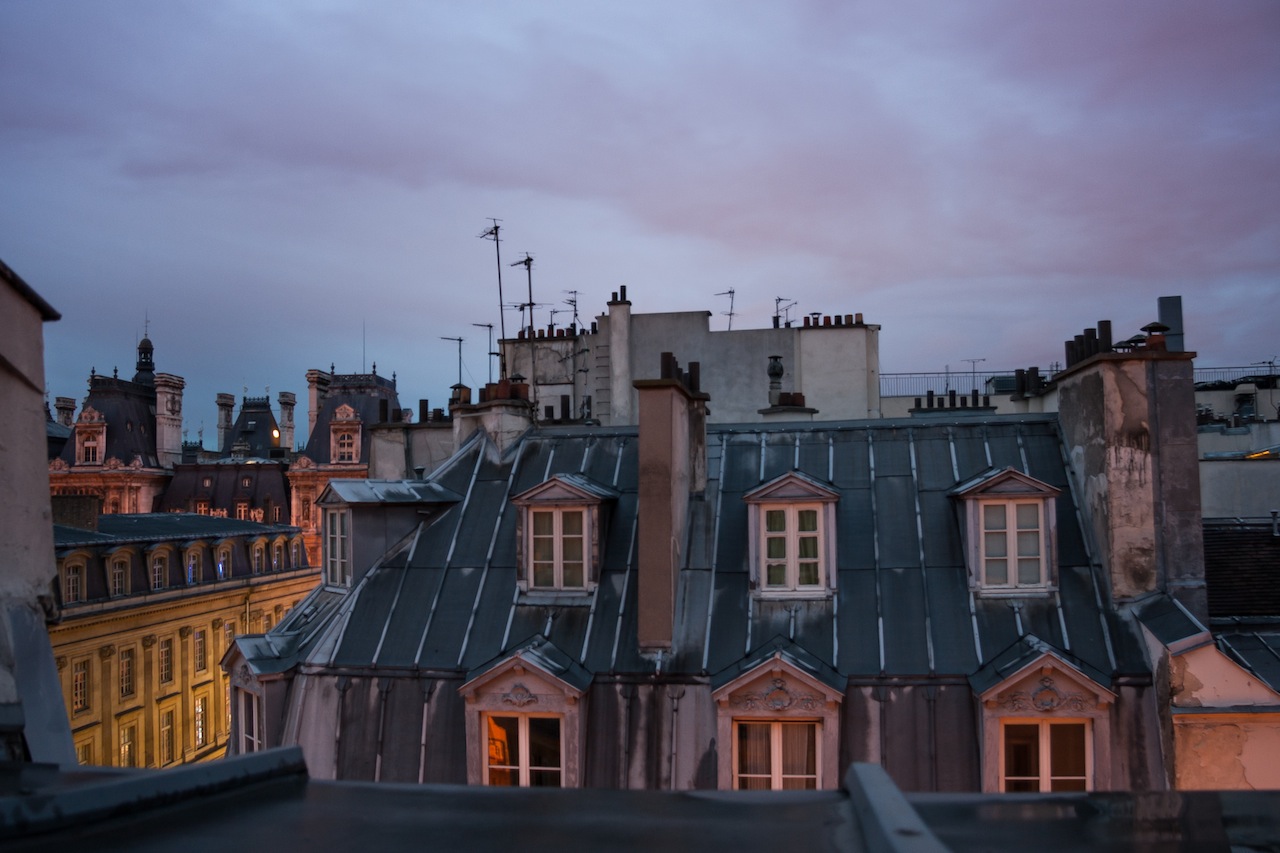
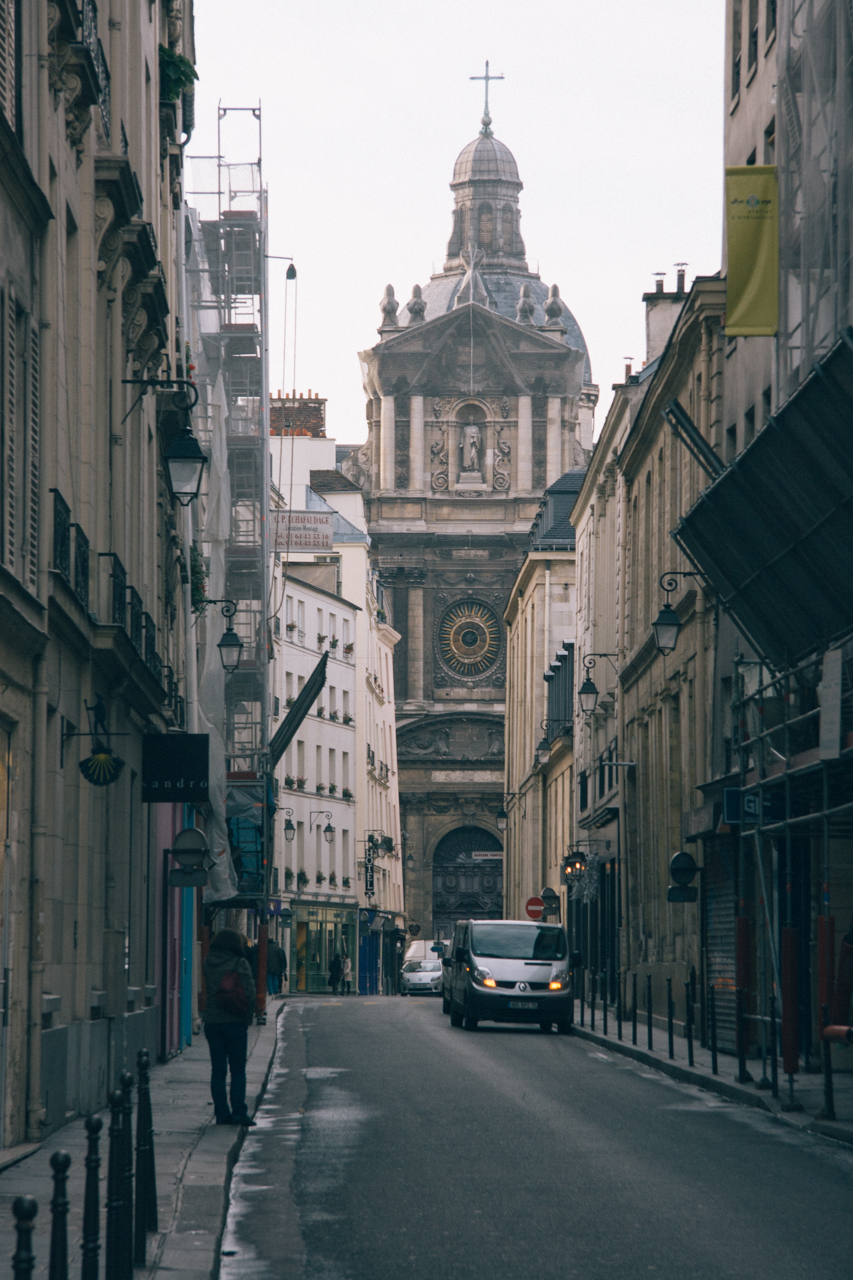
The historic Jewish neighborhood in Paris spans across parts of the 3rd and 4th arrondissements and will be our home base in the City of Lights. The Marias was originally a marshland (Marais is French for swamp) that was drained and irrigated to grow produce for the rest of the city until it was populated by the French aristocracy, which began with Charles I of Anjou in the mid-13th century. Its aristocratic leanings continued into the 17th century when Henry IV built the Royal Square (Place Vosges) in 1605 and a number of French nobles established their urban homes there. Le Marais saw its golden age in the 17th and 18th centuries, and fortunately, several of the estates are still standing to represent.
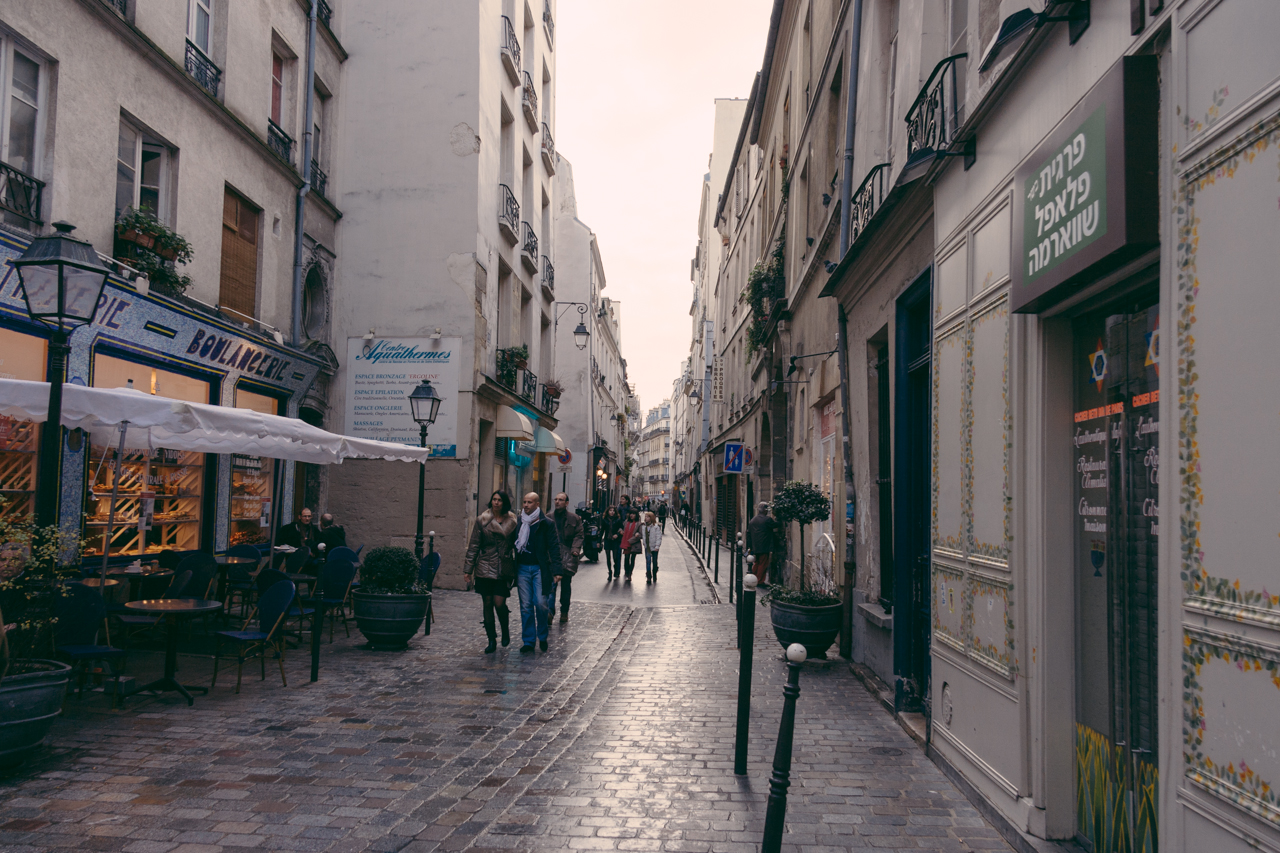
Marais’ other name, Pletzl, is Yiddish for square and was used to refer to the garment district sweatshops and overcrowded housing in the neighborhood. Le Marias has been home to large Jewish communities on and off (depending on the munificence of the current ruler) since the 13th century when it was called “The Old Jewry.” This was especially true after all the fancy people began to favor and build their hotel particuliers in the Faubourg Saint-Germain and Marais became passé. There was a surge in the Jewish population in the late 19th and early 20th centuries as refugees escaped Alsace and Eastern Europe for the Marais. The neighborhood was particularly targeted during Nazi occupation and there are several memorials in the area commemorating the tragedy that befell 75% of the neighborhood’s population that died in concentration camps.
Le Marais fell into decline under Louis-Phillipe and became a primarily industrial area especially fueled by the textile industry. Le Marais was in such a decline and it was staunchly defended by local inhabitants such as Victor Hugo, that it was largely ignored by Napoleon and Haussmann’s renovations and consequently today it has more pre-revolutionary streets and buildings than any other neighborhood. Attention was finally paid to the slum in the ‘60’s by De Gaulle’s Minister of Culture, Andre Mlraux, who passed a bill to protect and renovate historic areas, including Le Marais. Le Marais has seen steady growth and gentrification since.
Food
(34 Rue Des Rosiers, Closed Saturdays)
Consistently recognized as the best falafel in all of Paris (some claim the best in Europe and as the restaurant itself claims, the world), it is recommended as a must eat and the long queue, a must endure. It is suggested that it is best experienced eaten standing up out on the Rue de Rosiers, which is the main thoroughfare through Marais’ historic Jewish quarter.
(30 rue Vieille du Temple)
We had a great lunch at this over 100 year old café. Its very tiny, authentic, and reasonably priced. We had really great service and the waiters here weren’t too cool to speak English - they even forewarned us about the exotic French food we had ordered. The spot is named for the horseshoe shaped bar that occupies a fair amount of the small restaurant’s space.
(28 rue Vielle du Temple)
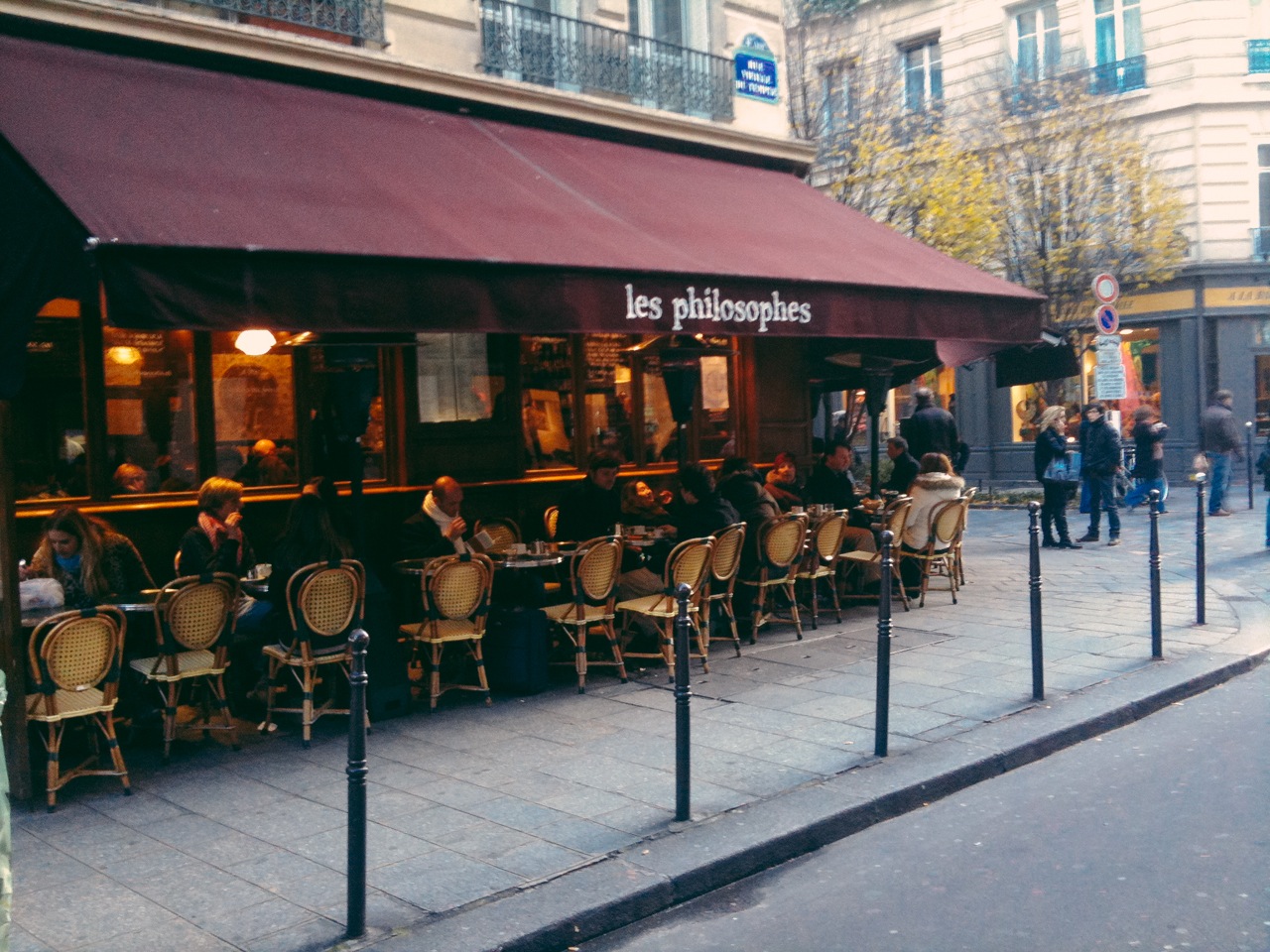
The tarte tartin we had here was delicious. It was much more bustling than Au Petit fer a Cheval and quite a bit more spacious, though about as packed.
(31 rue Vielle du Temple)
Bookshop and wine bar
(27 Rue des Rosiers)
Yiddish baked goods
La Cave a Bulles
(45 Rue de Quincampoix)
Bar with huge selection of beers
Marche des Enfantes Rouges
(39 Rue de Bretagne; open Tuesday, Wednesday, Thursday from 8:30am to 1:00pm and from 4:00pm to 7:30pm; Friday and Saturday : from 8:30am to 1:00pm and from 4:00pm to 8:00pm; Sunday : from 8:30am to 2:00pm)
Established in 1615, it is the oldest market in Paris. It retains its name from its history as an orphanage founded by Henri the IV’s mother and Francois the I’s sister, Marguerite de Navarre, where the orphans wore red to signify their royal patronage. The market’s selection is notable for its variety and is frequented by locals and tourists alike.
(2 rue Roger Verlomme)
Check out the silly movie on the website. This place serves Provencal style food, the prix fixe is supposed to be a very good deal and the chocolate mousse is highly recommended.
Le Il Grecques
Sites
Place Vosges
(straddles the 3rd and 4th arrondissement)
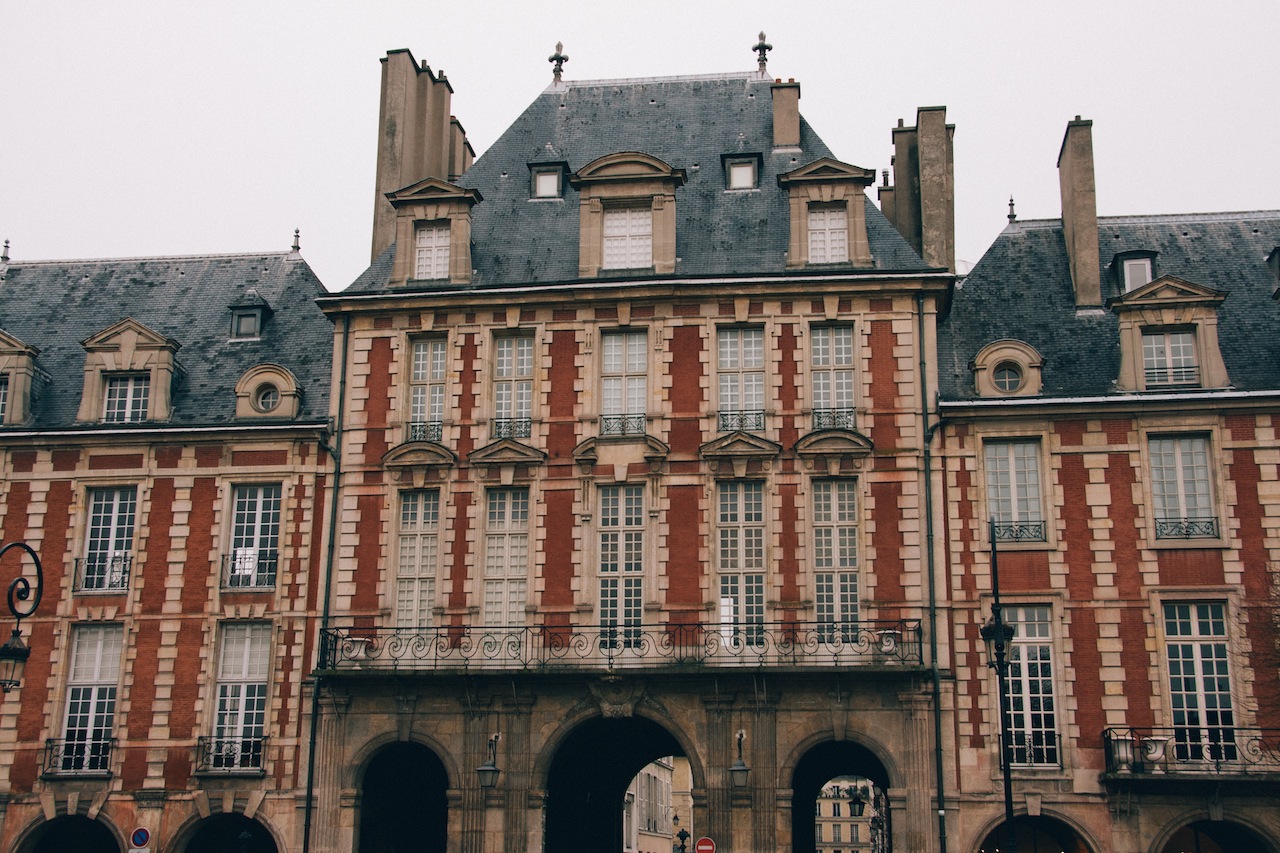
Originally named Place Royale, this is the oldest planned square in Paris and was built by Henry IV in 1605 with the intention of establishing it as a royal residence; however, no royals have ever lived there. It is one of the earliest displays of European urban design and planning . The square was inaugurated in 1612 to celebrate Louis III wedding to Anne of Austria, and a statue of Louis XIII on horseback presides over the central park. This statue is a replica completed in 1825 after the original, erected by Cardinal Richelieu, was melted during the Revolution. The square was renamed when Napoleon rewarded the first region to pay their taxes in support of the Revolutionary army, Vosges. The name, of course, flip-flopped as power was “exchanged,” but Place Vosges eventually stuck. One of the more notable residents, Victor Hugo lived in #6 (at the southeast corner of the square) from 1832-1848, which is also when he wrote he most popular works including Les Miserables. You can tour his house, which has been turned into a museum dedicated to the author.
(23 rue de Sevigne; Free and closed Mondays)
The Carnavalet Museum is actually housed across two historic Parisian mansions, the Hotel Carnavelet, which may have been designed by Pierre Lescot and was later rebuilt by Mansart, and the Hotel Le Peletier de Saint Fargeau, and serves to educate on the history of the City. Nothing is in English, but there is quite a lot to see, surmise, and wonder about.
(5 Rue Thorigny , closed Tuesdays - looks like this will be closed until end of 2013)
This hotel particulier was built from 1656–1659 for Pierre Aubert, who made his wealth by collecting a salt tax. The Picasso collection exhibited is exceptional in that it is from Picasso and his family’s private collection and was paid to France as an inheritance tax. It contains art from all periods of Picasso’s work and its collection of sculptures is especially rare.
Billettes Cloister
(24 rue de Archives)
Built in 1294 it is the last medieval cloister in Paris
Musee de la Chasse et de la Nature
(62 rue de Archives, closed Monday and Holidays)
The Museum was established in 1964 by Francois and Jaqueline Summer, avid hunters and conservationists, and explores the relationship between humans and the natural environment through the history of hunting. The Museum lives in the Hotel de Guenegaud, which is the last of the private residences built by Francois Mansart. There are three themes of the museum: weapons and other instruments of hunting such as guns and horns; hunting products such as trophies and taxidermied animals; and artistic representations of wildlife and hunting such as paintings, prints, sculptures, tapestries, ceramics and furniture.
(19 Rue Beaubourg)
The center has several different purposes and houses the largest Modern Art Museum in Europe alongwith, a large public library and a center for music research. It is named for the President that decided to build it and locally is known as Beaubourg because of the area in the 4th arrondisment that it is in (though for purposes of this guide, I am referring to it as being a part of the Marais). As far as architecture is concerned, it is a crazy ass building that looks like it is still under construction, though it opened in 1977. The Center was designed by three architects - Renzo Piano, Richard Rogers, and Gianfranco Franchini and is in the high tech style. Regardless of what’s on exhibit, the Calder statue and a fountain dedicated to Stravinsky are just two of the exterior accouterments that make the museum a spectacle.
Place de la Bastille
The square where the Bastille used to be, though nothing remains since it was stormed in 1789 and completely destroyed by 1790. The square is marked by the Colonne de Juillet which was built between 1835-40 to commemorate the three days of the July Revolution (July 27-29 1830) and the beginning of Louis-Phillipe’s reign.