Montmartre
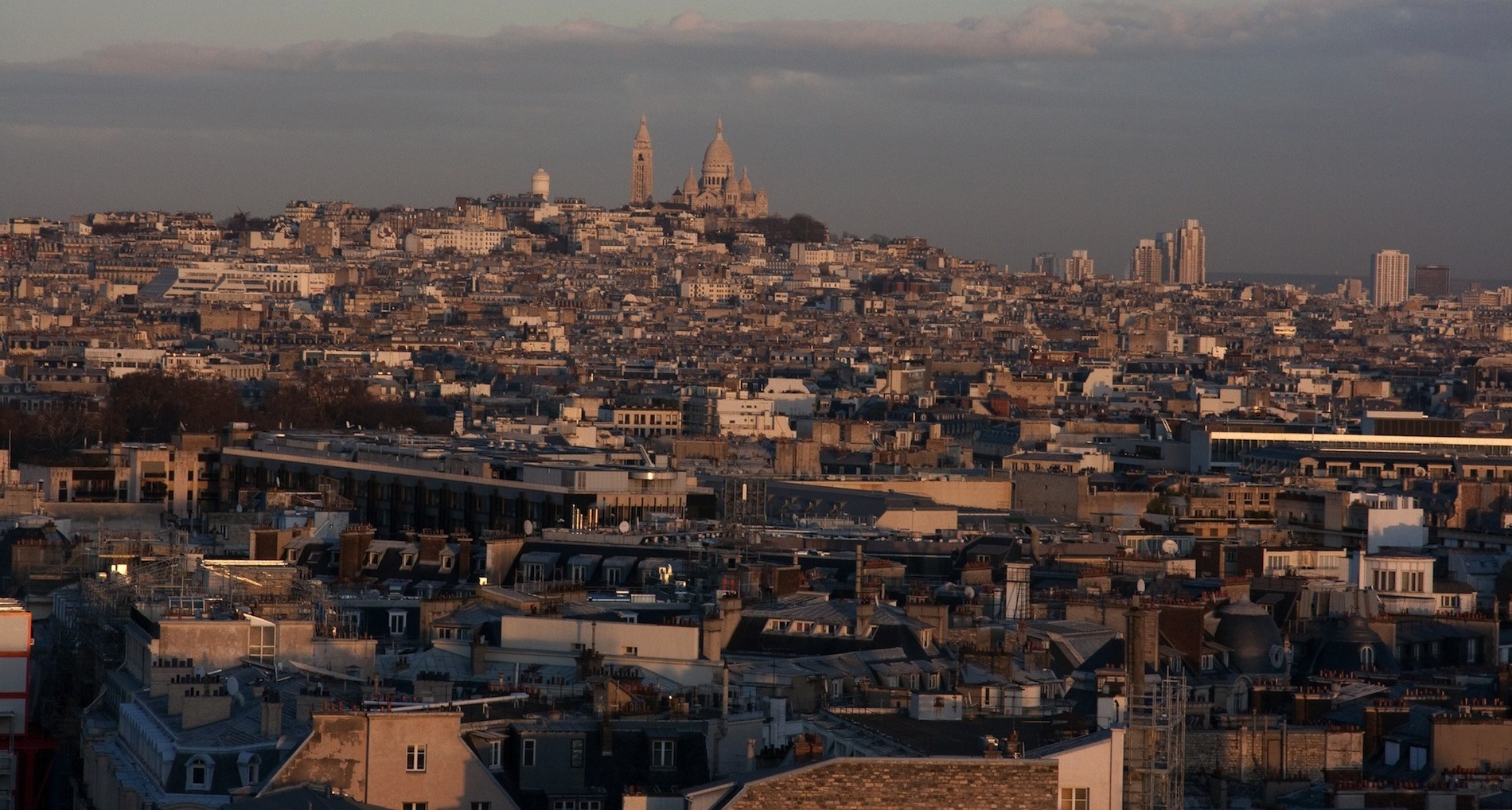
The largest hill in the area is a great signpost for the historical and religious atmosphere of the city. It began as a holy site for the druids, later housed temples to Mars and Mercury, and now holds the Sacre Couer in the same location atop the hill and the highest topographical site in the city. Originally named Mons Mercuri and/or `Mons Martis or Mount of Mars, the name was appropriated to mean Mount of Martyrs in honor of Sainte Denis who was decapitated there while proselytizing to the pagans (which didn’t initially stop him and he continued preaching and walking all the way to what is now the Basilica of Sainte Denis head in hands, where he finally died). The area is not most famous for its religious history, though the Basilica of Sacre Couer is quite a significant and notable landmark, but for the bohemian culture the hill birthed and fostered. When Haussmann laid siege to the city of Paris with renovations, his demolitions forced much of the working class from their homes and many relocated to Montmartre, which was just outside of Paris city limits and taxation (it was not made a part of the city until 1859-60). The low cost of living made it a haven for some less than savory characters, including artists who benefitted from cheap rent and found endless subject matter in the locals. The community that sprang up was in large part due to neglect as inhabitants were forced to find space wherever they could and at the lowest prices, which required that they repurpose industrial spaces and live in very close quarters. The neighborhood quite literally required creation and performance was found an acceptable form of payment.
Food
(15 Place rue de Tertre)
Located in the very tourist artist’s square, this is a legit Belle Epoque location to eat.
Sites
Bateau-Lavoir (Washerwoman’s Boat)
(13 Rue Ravignan at Place Emile Goudeau)
This is a great example of how bohemian Montmartre, and the very specific circumstances that created that community, could never be replicated. Though it burned down in 1970, there is still a marker commemorating the building and its significance in art history. The building was originally a piano factory that several down and out and not-yet-notable artists, actors and writers took up residence in. The bars and cafes near by acted as an extension of their homes because of their less than savory conditions so they surrounded by one another nearly all the time, including when they were sleeping. This proximity fostered and drove the creative relationships that would create what has been considered the most important artistic movement of the 20th century, as it was at Bateau-Lavoir that Picasso painted Les Damoiselles d’Avignon and the seed of cubism was planted.
Montmartre Cemetery
(20 Avenue Rachel)
Many famous artists and performers graves can be found here. Some of the more notable residents include Ninjinsky (his grave is complete with a creepy statue of himself as a puppet from Petrouchka), Stendhal, Offenbach, Degas, Foucault, Louise Weber (famous can-can dancer), Picabia, and lots more!
Au Lapin Agile
(22 Rue des Saules)
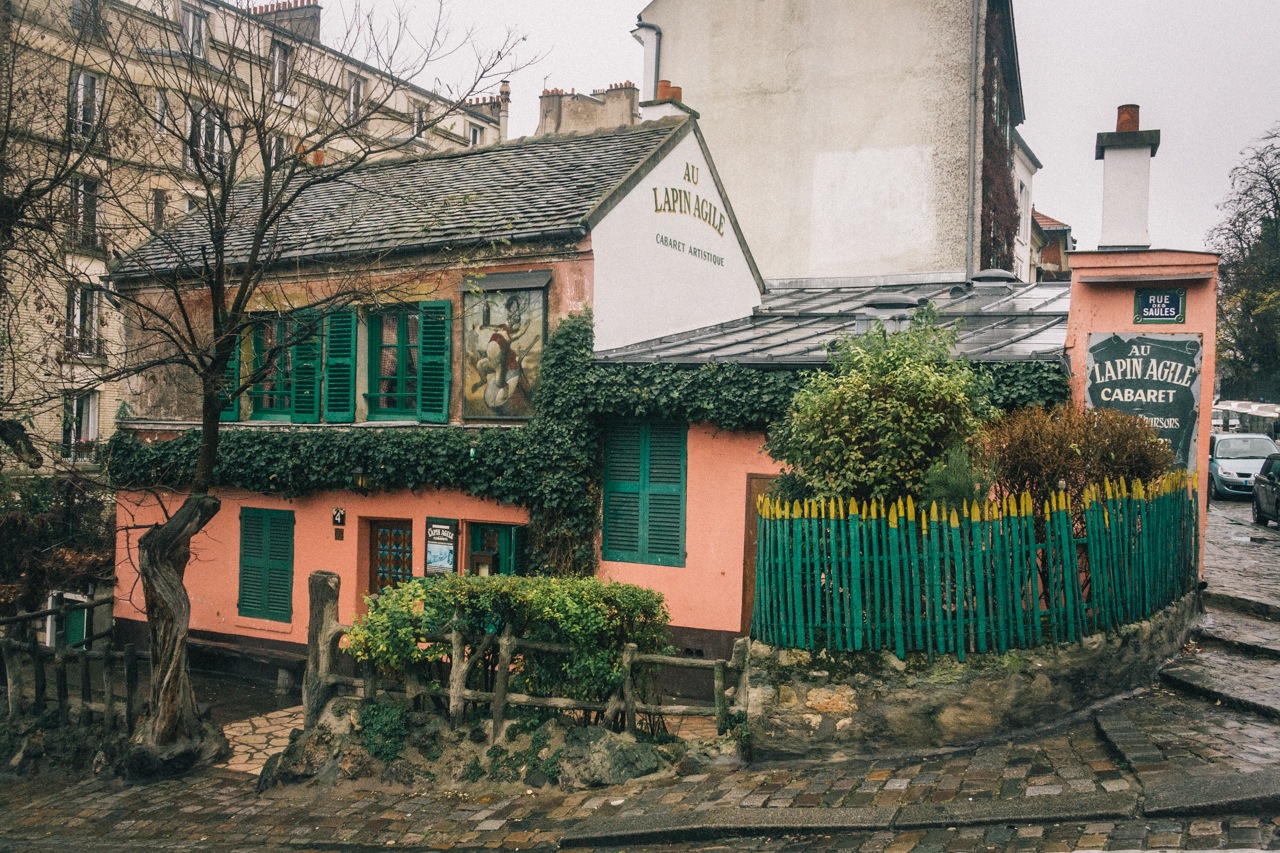
One of the most famous Montmartre cabarets, it was originally named the Cabaret des Assassins because a group of bandits was supposed to have killed the owner’s son. It took on its current name after Andre Gill painted a sign of a rabbit jumping out of a saucepan. The name was then Gill’s rabbit (Le Lapin a Gill), but that eventually became Cabaret Au Lapin Agile (the Nimble Rabbit Cabaret). The cabaret is historic because of its famous clientele and Picasso, Apollinaire, Modigliani, and pimps all frequented the joint. It doesn’t serve food but you can watch locals perform traditional songs as they would’ve back in the good old down and out days.
Le Chat Noir
(84 Boulevard Rochechouart)
Thought to be one of the first modern cabarets, the Chat Noir is historic for the bohemian culture it supported and its famous Steinlen advertisement. Owned by Rodolphe Salis, it was a place for artists to both eat and perform and patrons included some of the most famous men Paris – Toulouse-Lautrec, Verlaine, Satie, Debaussey and other famous guys that I am not cultured enough to know about.
Sacre Couer
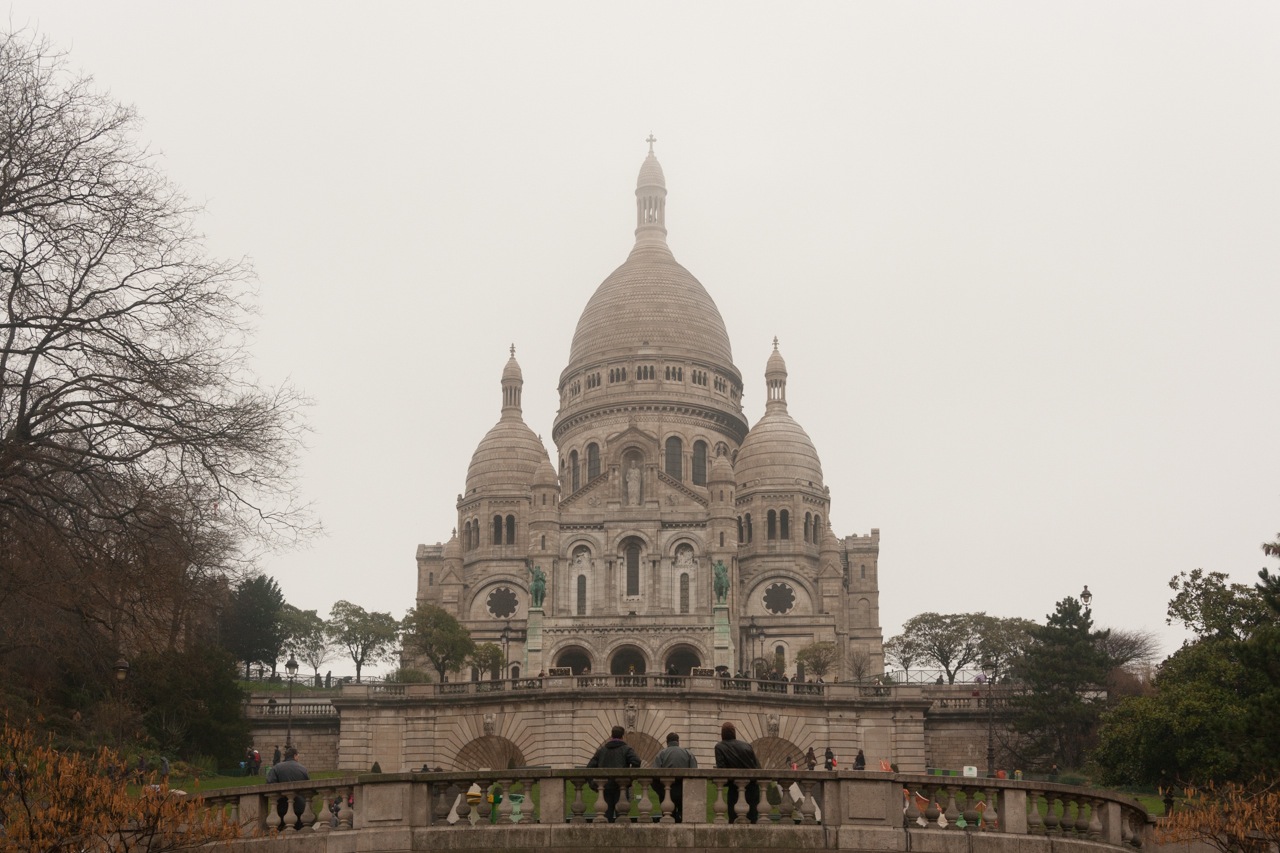
The Basilicia was constructed as a punishment and a reminder of what happens to Revolutionaries. The Paris Commune had a stronghold in the neighborhood and in a display of political and religious prowess, the church was built to “expiate the crimes of the Commune” though it’s currently claimed to actually commemorate the 58,000 people who died during the revolution. Construction began in 1875 and the Sacre –Coeur was consecrated in 1919. Though originally sanctioned by the government, the building was largely funded privately through the Catholic Church, which also gave them control over their design. The architecture selected was and is quite different from most of that in Paris and was considered quite extreme. Though, today, it is an accepted and recognizably Parisian monument.
Place Pigalle
The nudie part of town